
I’m Const. 12 years in US manufacturing. Ran a machine shop, built DigiFabster (quick quoting for job shops), worked with hundreds of manufacturers across 40+ countries. This newsletter chases one thing: the gap between the headline and the data. Someone’s always selling hopium. I find it.
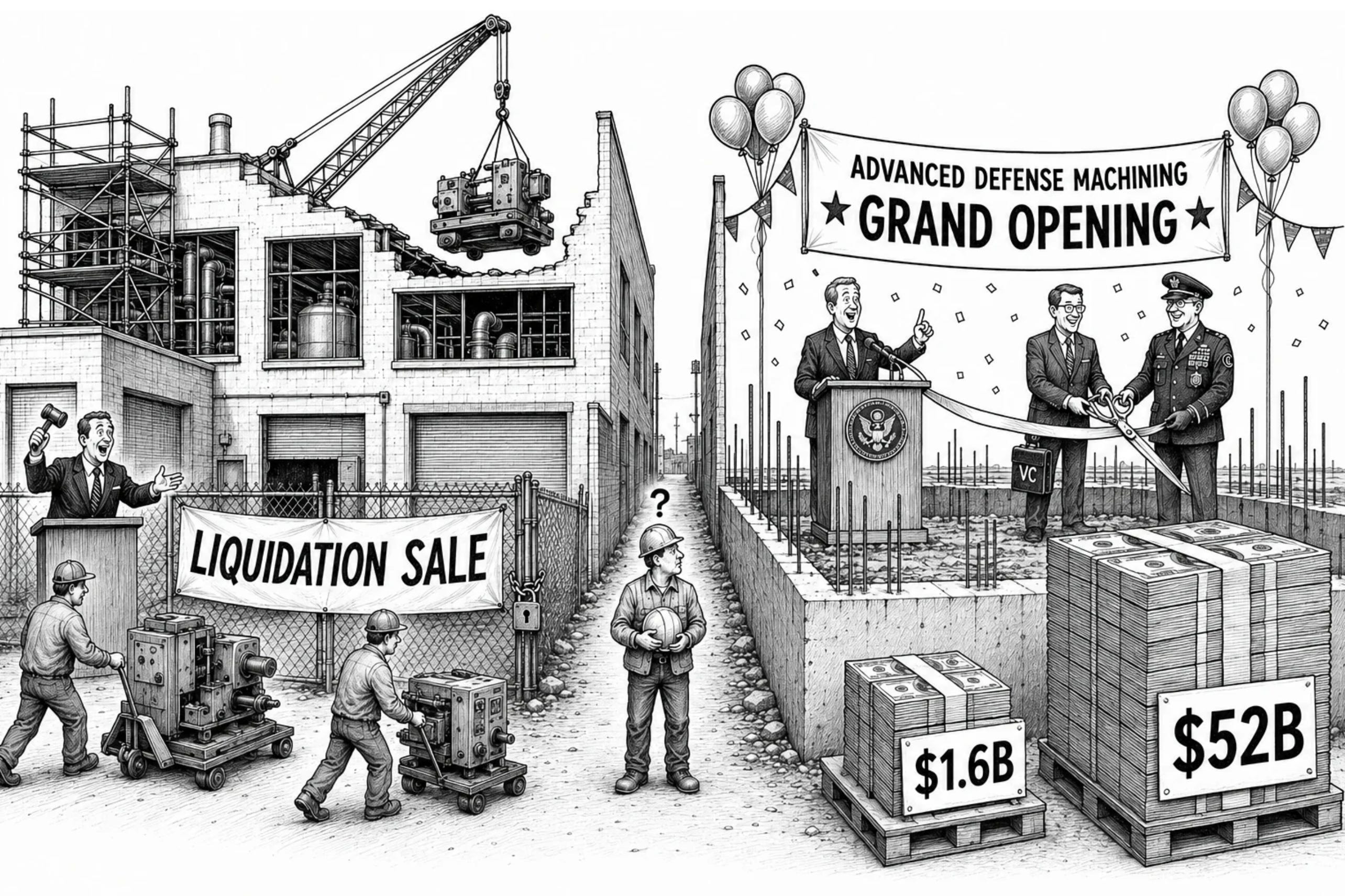
The $1.77 trillion in announced US manufacturing commitments since 2025 is real. The problem is where it's going. Last few weeks I dug into which products carry a US cap table and a Chinese BOM, who gets funded, who staffs the factories.
So this week I tried to map the actual picture: what’s worth building here and what isn’t, what pulls capital and what doesn’t, and where the real gaps are. This is the strategy layer, chapter four of four.
The Filter
I believe two questions do most of the work here. One, if China cut this supply tomorrow, how bad is it, across how many sectors, how fast. Two, can the US actually compete, given our power costs, our labor, our patience with capital. Put those on a grid and you get four tiers. Most of the money is piling into the tier that already has money.
Tier 1: Build Here. Nobody Is.
High pain if it’s cut, and the US can genuinely compete. The gap is open because capital showed up wrong, or didn’t show up at all.
The clearest one I’ve found is on-demand FATP. If you don’t live in hardware: FATP is final assembly, test and pack. The last mile where someone takes your pile of parts, screws them together, checks it works, and boxes it. What Foxconn does for Apple. SendCutSend and Xometry already made parts a solved problem (ten ways to get a bracket cut by Tuesday). But assembly… nobody solved.
Jabil runs 50,000-unit programs, not 500-unit runs with the boards, the mechanical, the test and the pack in six weeks at a price a seed-stage startup can pay. So every hardware company still flies to Shenzhen by unit 200. em m0houris, a hardware operator, put it plainly on X:
“we have a glut of part production, but the quiet part no one is saying out loud is that someone needs to put it together. this is the hard part.”
I went looking for the SendCutSend of assembly and found no pure play, only companies circling it. Bright Machines raised $126M to automate assembly cells. Formic and Tutor Intelligence rent robot labor by the hour. MakeMatter is building autonomous contract manufacturing for robotics, and RCM does domestic PCB assembly at small scale. But a service where you ship 400 units of design and get a finished, tested product back? Didn’t find it. If you know one, reply in comments, I’ll feature it. Real ask, not rhetorical.
The one that actually gets me is nitrile gloves. The US imports 99% of them, and the raw rubber (NBR) traces back to China almost no matter which country dips the final glove. Scott Maier built a fully domestic plant in Wytheville, Virginia, got it 80 to 85% complete, and the Development Finance Corporation, the exact tool built for this, issued zero loans under its PPE mandate. The equipment is being sold off this year. His own words:
“USG does not see the need to support a domestic nitrile glove industry”
A $0.03 part (!) that stops chip fabs, pharma, food and defense at the same moment if it dries up, and we’re selling the plant for scrap.
Tier 2: Build Here, But Only With Government
High pain if it’s cut, but the unit economics never close on their own. My read: the market is never funding this alone, and you can see it in who shows up. The government, every time.
Rare earths are the cleanest example. China refines about 90% of the world’s supply. MP Materials runs the only US mine and processing site at Mountain Pass, and look at how it scaled: the DoD became its largest shareholder, $400M in preferred stock, plus a $110/kg price floor. That’s not your Series B-C. That’s a government guaranteeing the price so the plant survives. Everyone else in the lane looks the same. Phoenix Tailings, a VC-backed refiner, has $116.6M in venture money plus a Pentagon commitment up to $500M. ReElement, an Indiana refiner pulling rare earths out of scrap magnets with chromatography, carries an $80M Pentagon loan (under review, they have doubts it can scale). Energy Fuels, an old uranium miner, just landed a $725M government loan and is spending it on a century-old German magnet maker. Every serious entrant has a government check stapled to it. That’s the tier telling you what it needs.
Gallium and germanium are worse. China makes about 98% of refined supply, restricted exports in July 2023, banned them to the US, then temporarily suspended the ban through November 2026. US primary gallium production is basically zero, and I found no funded US company fixing it at scale. Another open gap, Tier-2 flavor. It needs a strategic reserve, not a pitch deck.
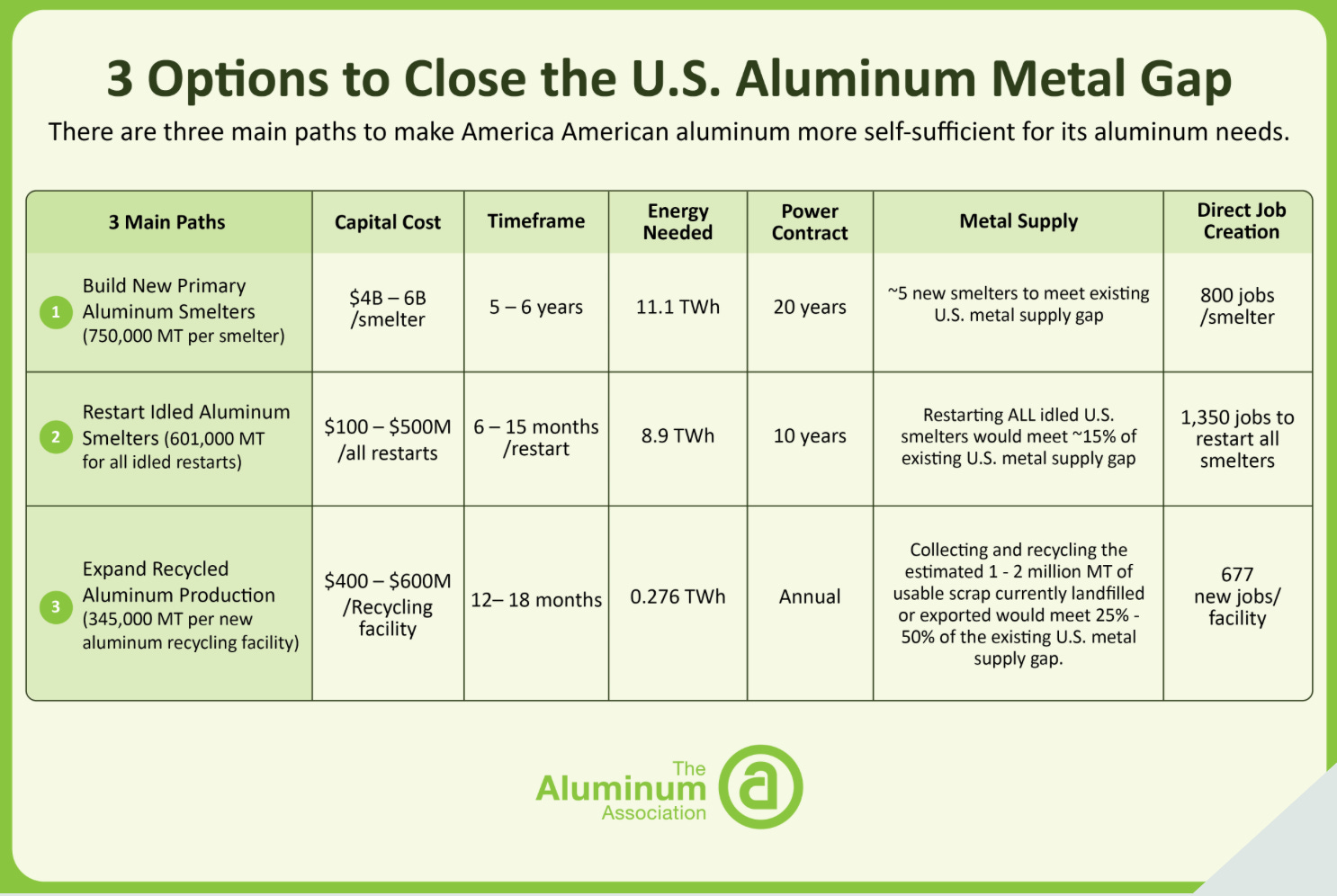
Same story with aluminum: 23 US smelters in the mid-90s, four today, because primary aluminum needs enormous, cheap, uninterrupted power and nobody builds a smelter without a decade of subsidized electricity behind it.
What I actually want is a directory for this tier. Not another list of VC startups building the shiny stuff, but the raw dependencies nobody here will touch: the materials, the precursors, the processing that independence actually runs on, sorted by category and by how badly it hurts if it’s cut. Most of it looks unrealistic or just too hard, which is exactly why it sits open.
Some of it is starting. Musk put over $1B into a lithium refinery outside Corpus Christi that began producing in 2025, the first large-scale battery-grade lithium refinery in the US, pointed straight at the China processing dependency. That’s one plant. We need a hundred, and a map of where they go.
Tier 3: Leave It To China
Low pain, or China’s lead is just permanent. Money spent trying to win it back is money wasted. Here are two examples.
Consumer electronics glass. Lens Technology, run by Zhou Qunfei (mentioned in one of my previous Hopium’s), makes the cover glass on basically every iPhone, and now display glass for 30 car brands including Tesla. She started grinding watch glass on an assembly line at 16 and spent 20 years building that base. Corning still makes the raw glass here, but the fabrication and finishing at that scale and margin is China’s, and no US plant is winning it back. That’s a leave-it, not a fight.
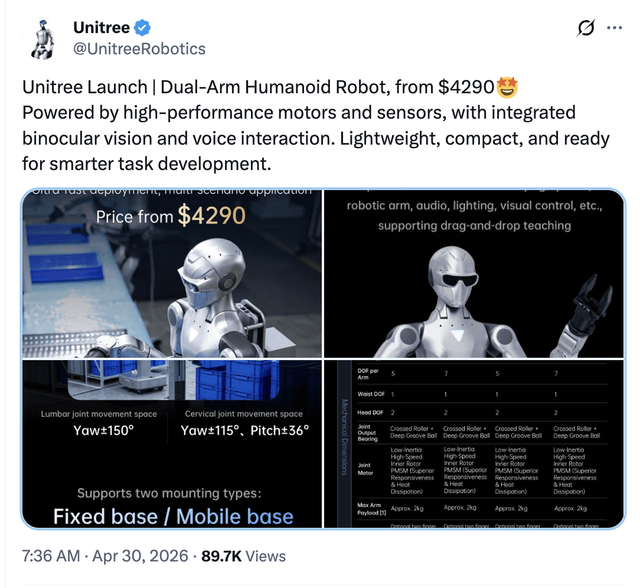
Humanoids, I want to be careful with, because it’s not as simple as “China won”. The US has the deepest bench at the frontier. Figure is deploying at BMW, Agility’s Digit is doing real, paid warehouse work, and Apptronik, Optimus, 1X and Boston Dynamics are all serious on capability and embodied AI. That’s the American strength: new capability, not cheap volume. But the numbers are brutal. Unitree shipped 5,500 humanoids last year, profitable, cheapest unit $4,290. Agility’s Digit runs about $250k. Tesla is targeting $20 to 30k and hasn’t shipped one commercially.
So my read: short term, racing China on cheap volume is a losing bet, leave it. Long term, if Tesla converts Fremont to a million units a year or Figure’s line hits target, the gap narrows and it changes. So build humanoids, just don’t try to win them on the price of the unit. Win on the capability and the software, and let China make the cheap hardware.
Tier 4: The Complicated Middle
Real security value and a weak commercial case. Hadrian ($1.6B valuation, Founders Fund and Lux) is building CNC capacity for defense, the right bet, though parts were never the only bottleneck. Its CEO Chris Power named the real wall:
“there aren’t enough skilled tradespeople to even be hired. We need millions and millions and millions”
Chips are funded right, TSMC putting $165B into Arizona with $6.6B of CHIPS money behind it. But… the question that is rarely asked: who assembles the finished systems at volume? FATP again, one tier up.
Where The Money Actually Goes, And Who’s Quietly Doing The Work
Look at Relay’s map of the buildout: 525 companies, 134 in space, 111 in defense, 96 in manufacturing. That’s where venture clusters, the part of the stack that photographs well and fits a 10x story.
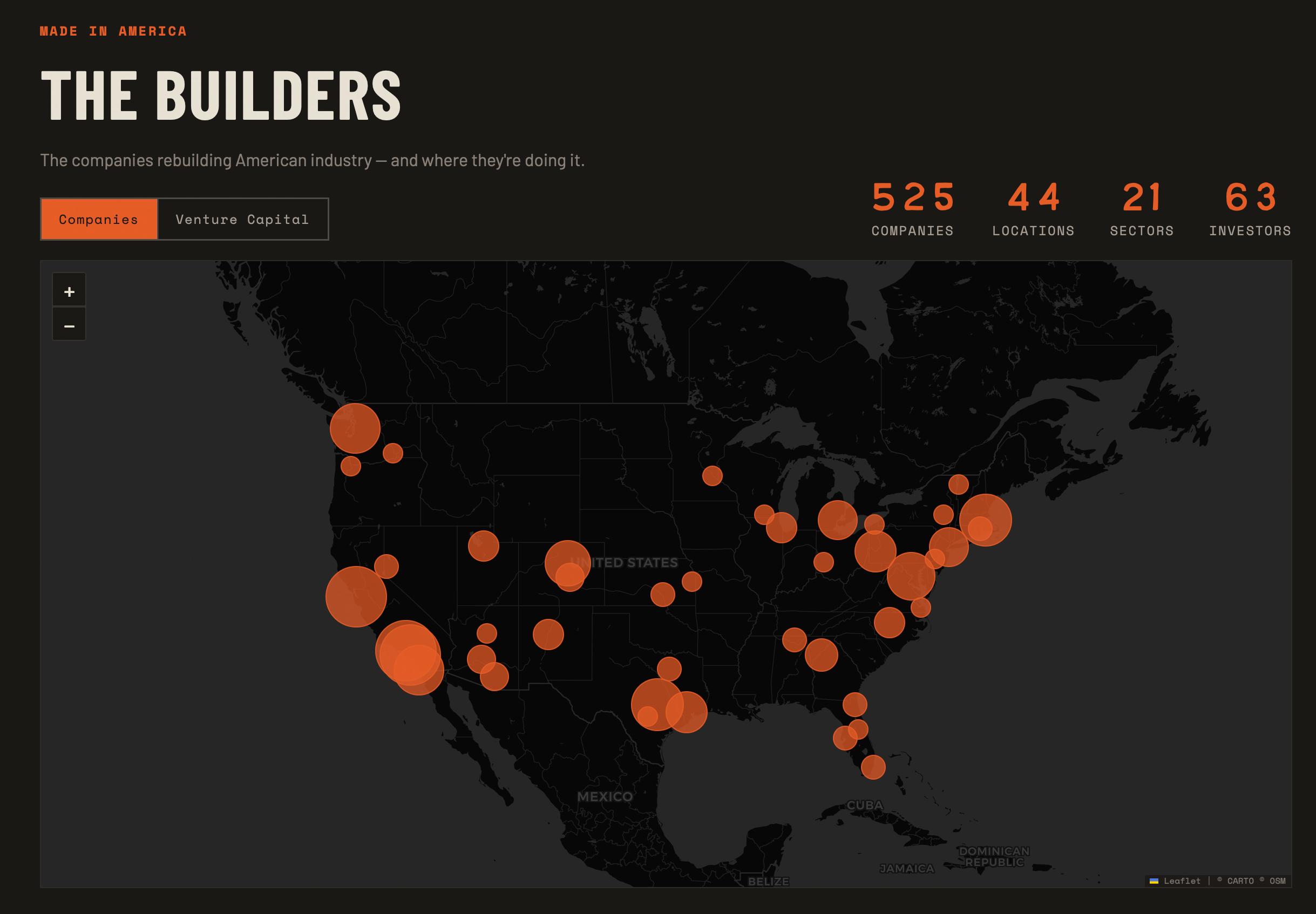
The part people underrate is who’s grinding on the unglamorous gaps with no venture money at all. Russell Winter keeps a manufacturing roll call on X, a couple hundred small US shops describing themselves in five words: cast iron foundries, PCB assembly, spiral bevel gears, Swiss lathe work, domestic contract assembly. Caleb Chamberlain (OSHCut) is in it. These are the people actually playing the long game, and almost none are fundable by a fund.
There’s also a second wave forming right under the Tier-1 names: shops setting up specifically to supply them. Gears and harmonic reducers for the robot builders (a part the US mostly imports from Japan and China today). Re-engineered OEM replacement parts on faster lead times. The small, boring subsystems every Figure or Anduril will need second-sourced at home. That is exactly how China’s supplier density got built, one specialized shop at a time. Watching that layer form is more interesting to me than the next $300M defense round. Gavin (@67Designs) keeps saying it:
“We are doing this to ourselves. Stop blaming China. Start playing the long game.”
I think he’s right. The grid above just tells you which parts are worth playing.
So…
If you build one thing off this issue, build on-demand FATP. Most undercapitalized white space in US hardware, and whoever builds the Jabil-for-400-units owns the chokepoint every hardware startup hits on its first real run.
Rare earth processing is real too, but it’s an infrastructure play, not a startup: get the offtake or the price floor signed before you break ground, the way MP, Phoenix Tailings and Energy Fuels did.
And if you’re an operator in that roll call, or setting up to supply the Tier-1 primes, the gap map above is your addressable market.
Everything in the “leave it to China” box is a trap that burns capital to prove a point.
I’m Watching This
Defense manufacturing as the Pentagon’s own bottleneck. Allison Giddens, a manufacturing exec, summed up the irony on LinkedIn: parts sit ready for eight weeks while the government’s paperwork holds up the shipment. The constraint Washington blames on industry is partly Washington.
The $73B missile budget hitting a propellant wall. The whole missile-defense buildup runs through two solid rocket motor makers. The 2027 goal is roughly 5,000 interceptors a year, projected deliveries sit above 2,100. Emergency cash doesn’t fix it, because you cannot surge artisanal propellant.
China’s AI playbook, said out loud. The argument going around: give away world-class models for free, export cheap inference on cheap electricity, make the world depend on your models, chips and standards. Profit optional, power isn’t. If that’s the game, “but they’re losing money on it” is not the rebuttal people think it is.
Till the next week…
Const
We must build under any circumstances including DOD war state capitalism and we must build enormous power generation. America got rich before from oil, auto, dark fiber and other gluts that were opportunities waiting to happen. If it means state capitalism so be it, this is survival.
Salus Americae Suprema Lucre
Salve America sola lex